Aarhus
2019 - 2023
Recycling is the key word
Built according to Pension Denmark's housing concept Bofællesskaber (Virke)
The project is part of the urban development of Trælasten in Aarhus, which previously housed a timber trade and a building supply store.
Teglgården is built according to Pension Danmark’s housing concept for cohousing communities and reflects versatility in its complex, thoughtfully designed form, designed by Vandkunsten.
The residences consist of a mix of different housing types: 50+ cohousing, family homes, and student housing.
The overall architecture was established in connection with an integrated design process at the end of 2019.
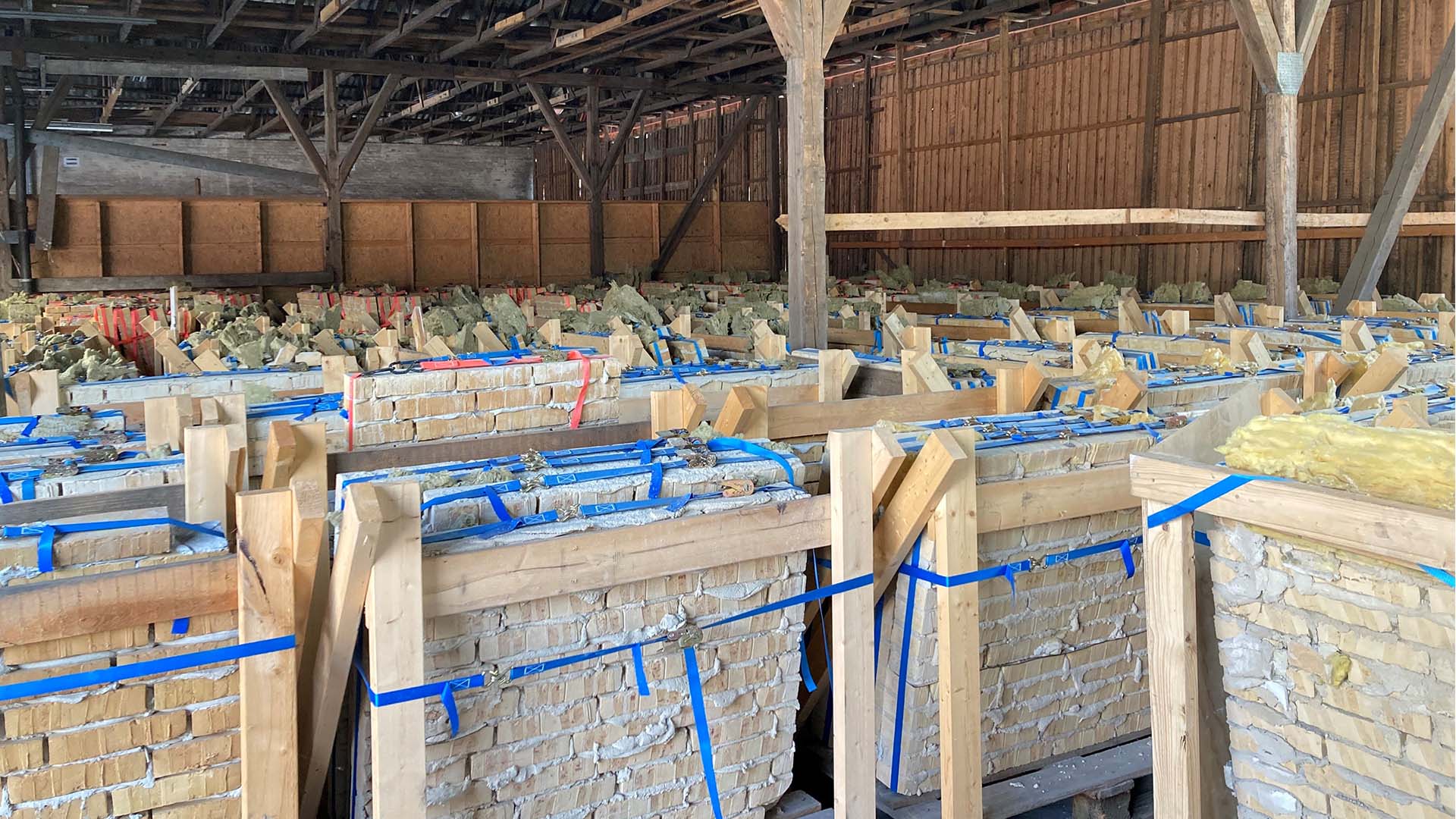
The bricks are cut and reused as whole batches
Recycling is the keyword, and about 90% of the building elements from the two lumberyards that previously stood on the 35,000 m² site are being reused. Thus, recycled bricks, cut and reused in whole batches, and windows will make up around 5% of the total building mass when all the projects in Trælasten are completed in 2029.
The existing office building is integrated into the new development
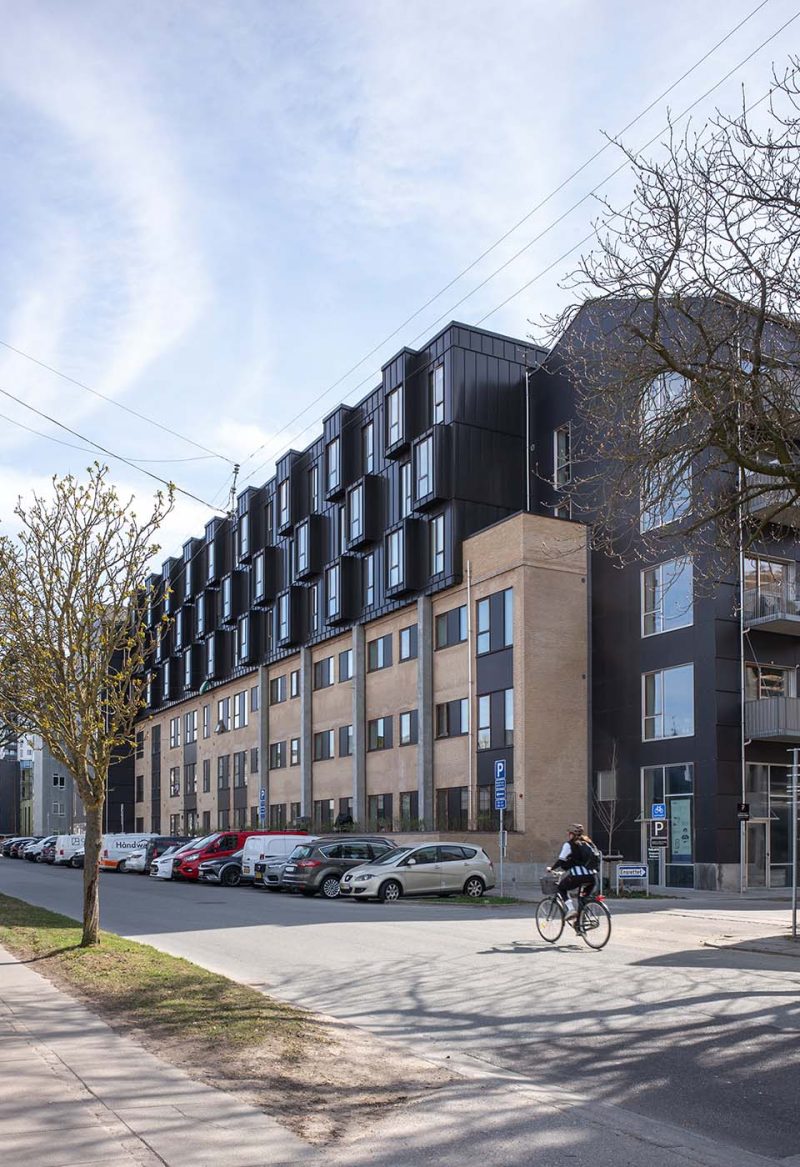
The project is based on a partial preservation of the existing three-story office building at Daubjergvej 15, which is incorporated into the new development, which has also been raised by an additional three stories.
Varied buildings
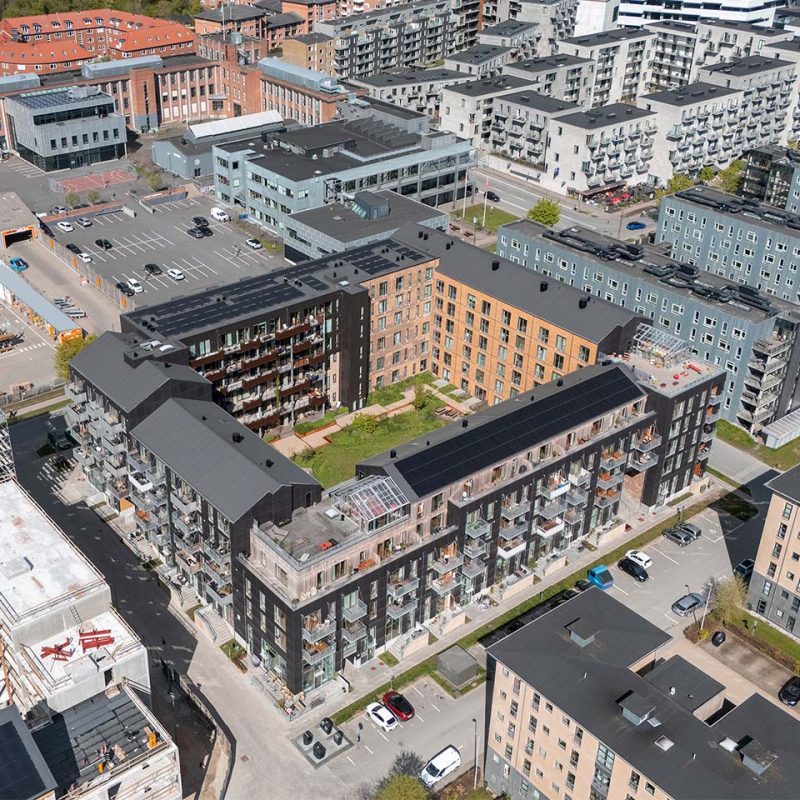
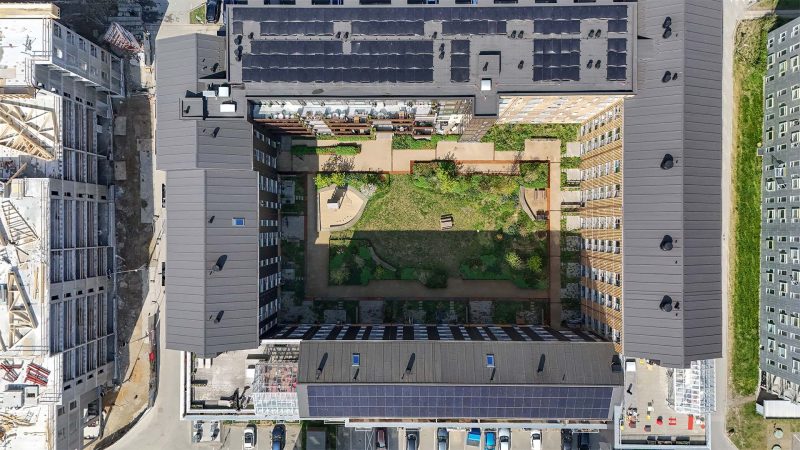
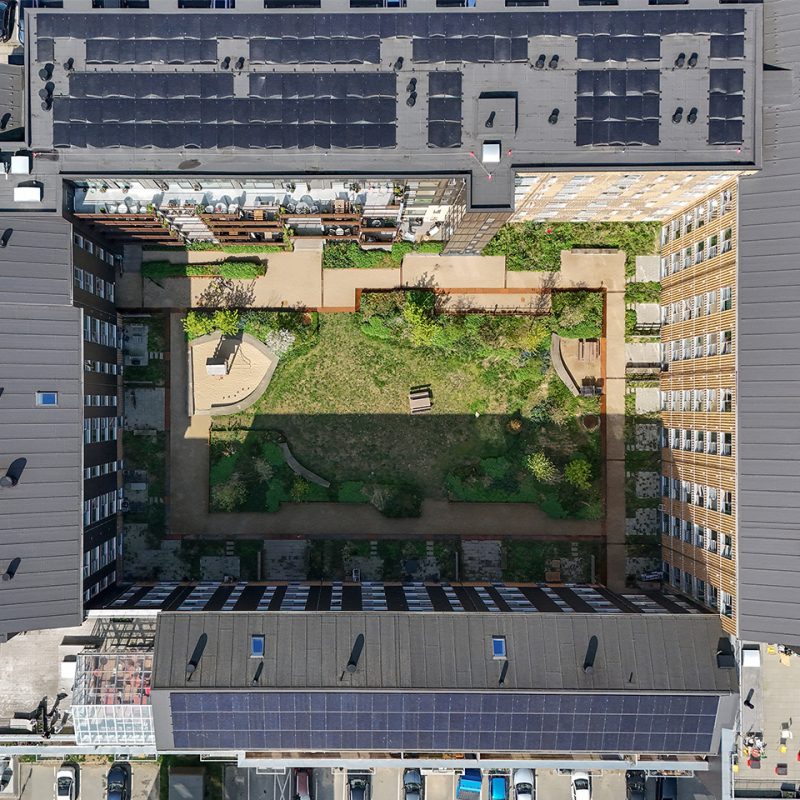
The overall development is designed as a closed block with building volumes of varying heights, from 4 to 6 stories. The buildings step down towards the south to mediate the transition between the higher, more urban character to the north and the lower, greener character to the south. At the same time, this creates optimal lighting conditions in the courtyard.
The development is visually broken down into smaller units, and the building volumes are varied through projections and recesses of façade sections and gables, variations in roof form, changes in materials, variations in façade cladding, as well as differences in building and floor heights.
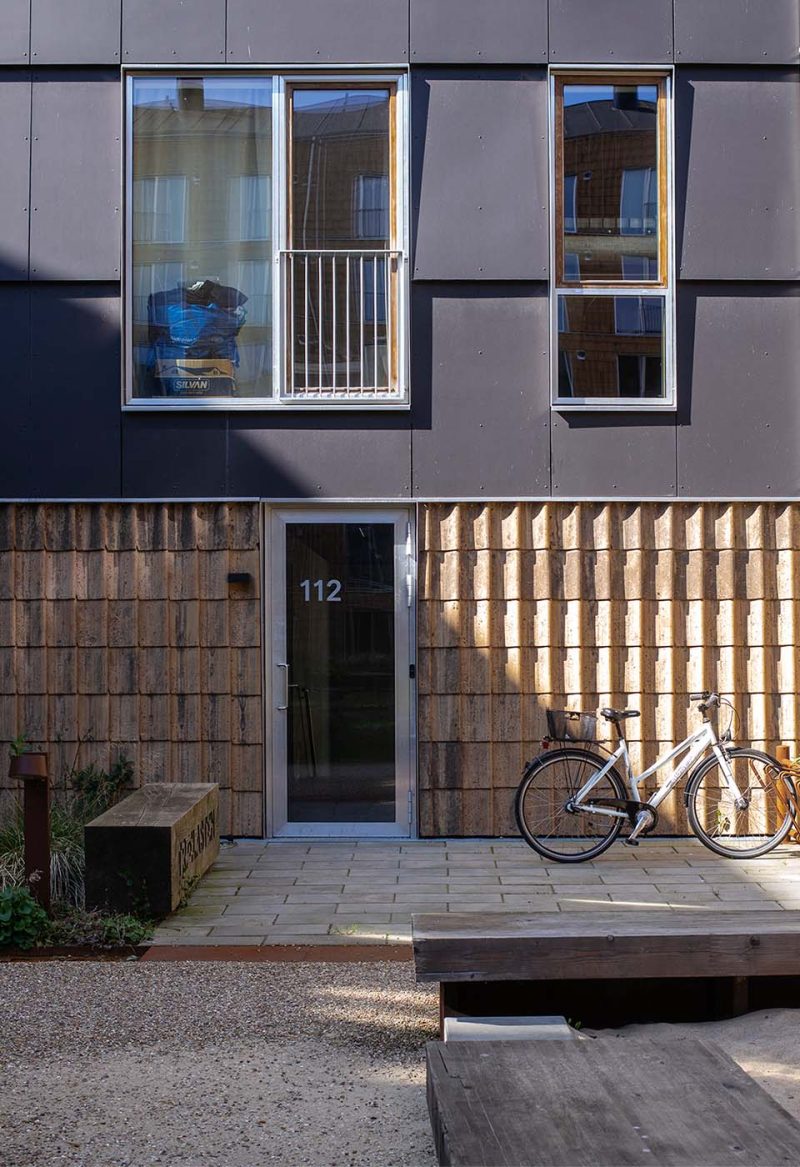
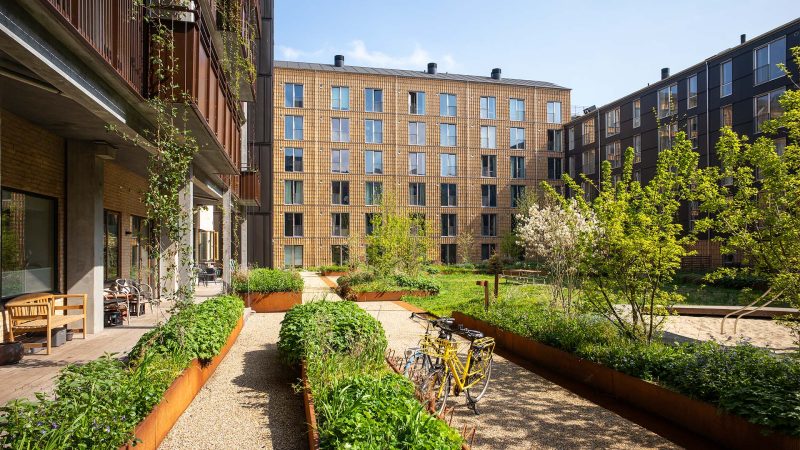
Reused wooden beams from the existing halls in the area surround the shared central lawn and the raised beds, and are also used as benches in the courtyard.
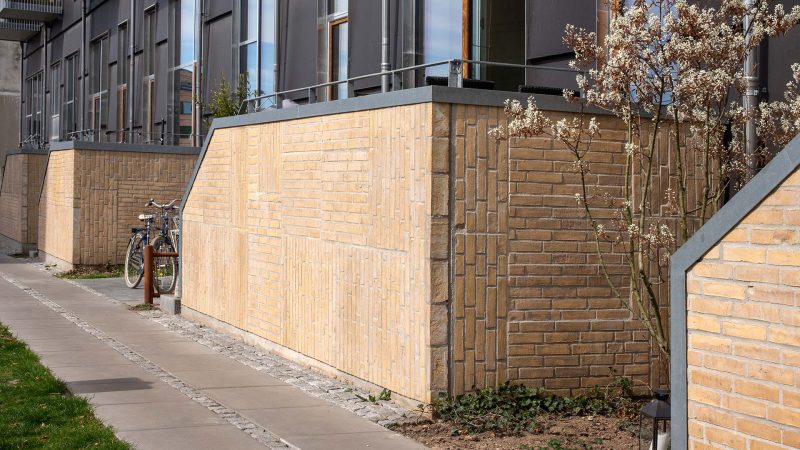
Other materials that have been reused from the existing building include roof tiles and cut sections of facade bricks, which are used as new cladding on the facade and as interior flooring. In this way, the outdoors and indoors are connected, taking their inspiration from the site’s history. Towards Åparken, cut brick sections are reused on the facade and as retaining walls around the private terraces at ground level.
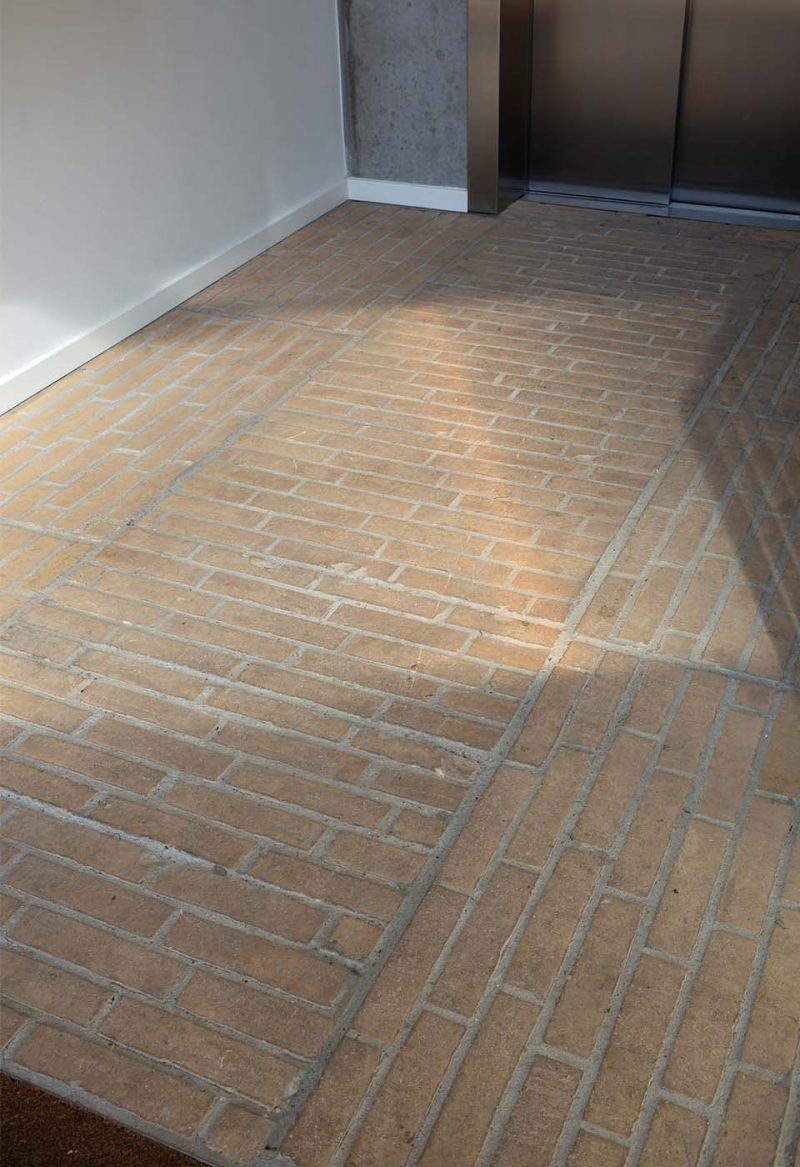
In stairwells, brick panels are reused as flooring.
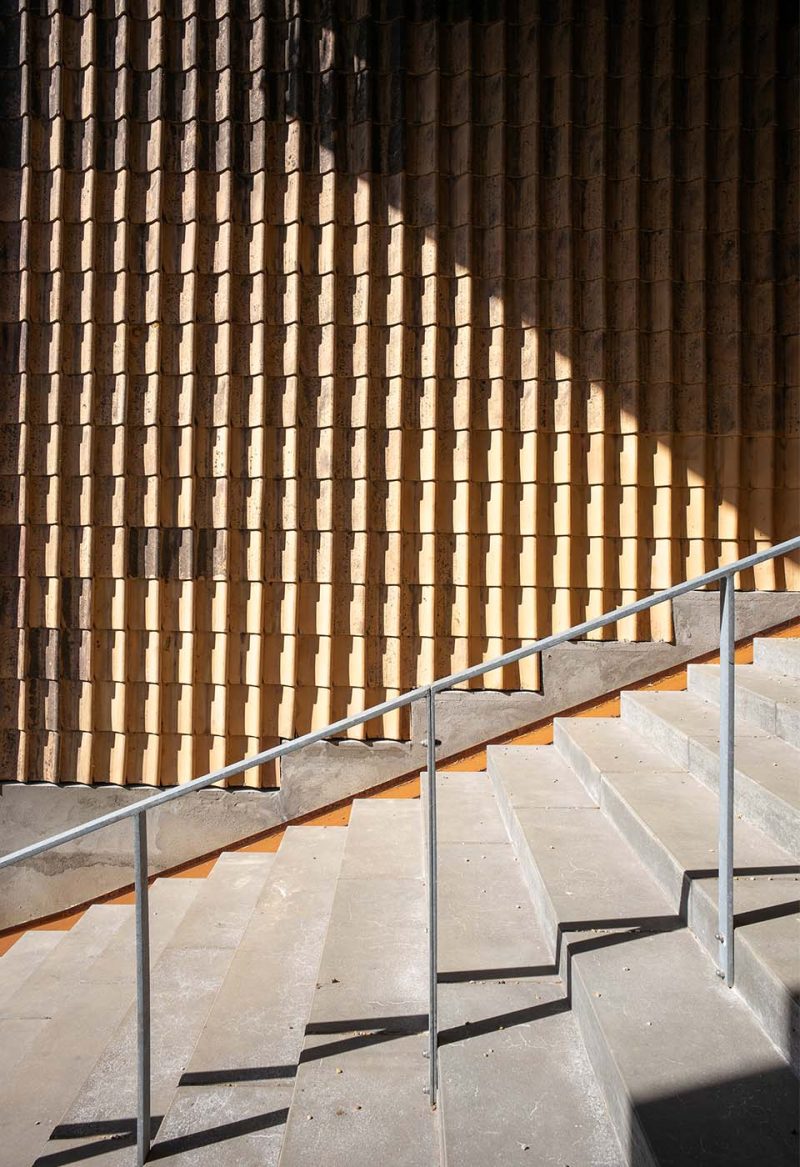
Against the courtyard on the ground floor, and on the entire courtyard facade facing east and partially north, as well as on walls in the passageways, roof tiles are reused as facade cladding.
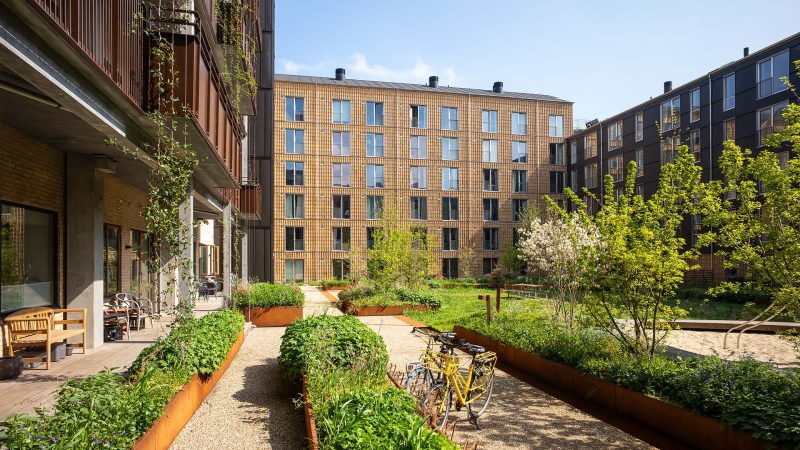
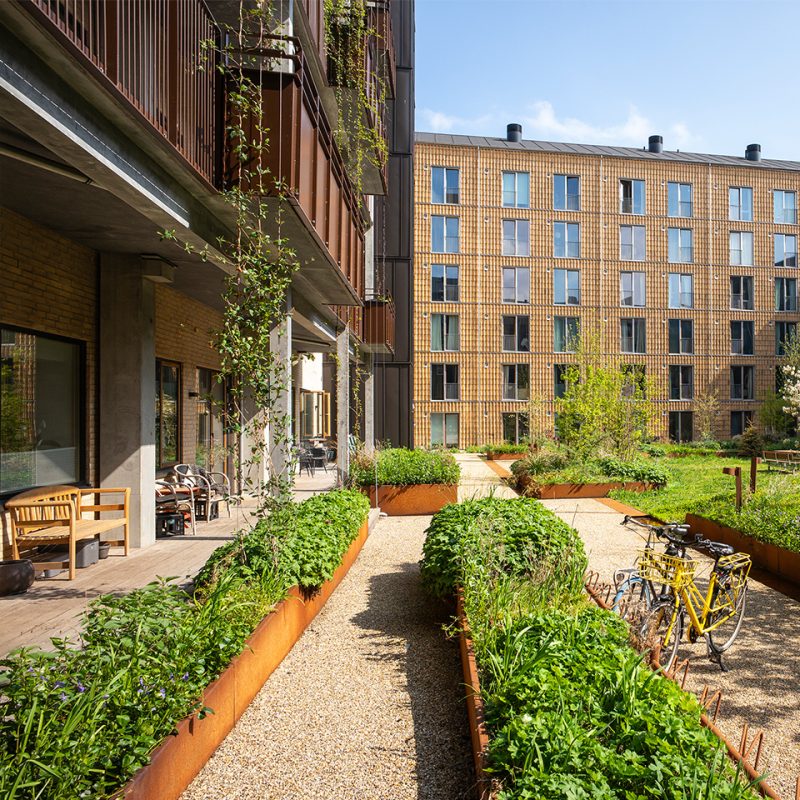
Shared courtyard in the middle
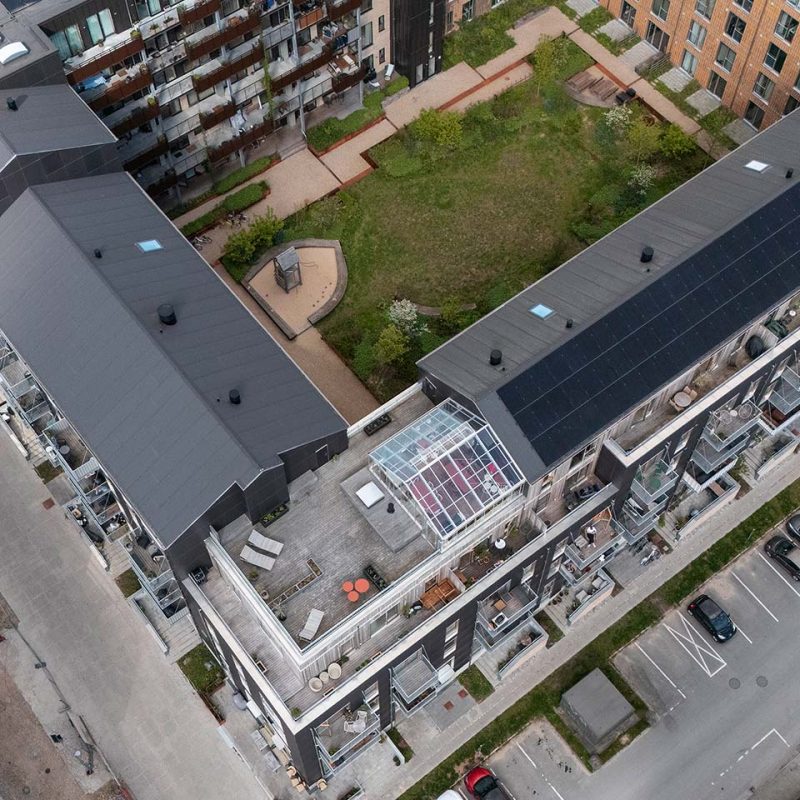
The raised courtyard is dominated by a varied planting of grasses, multi-stemmed trees, and ground cover in arched beds. Centrally, raised beds with benches made from reclaimed wooden beams from the existing halls in the area surround the communal lawn. Along the same edge, various functions are integrated, such as bicycle parking, seating areas, and a playground. The distribution path and the general paving in the courtyard consist of a surface covering of maize-yellow pebbles, which together with the untreated steel create a well-defined courtyard with warm tones. Paving with concrete slabs marks the main entrance, while private terraces are distinguished by smaller formats and more tactile paving surfaces. In the northern part of the courtyard, ramps provide accessibility between indoors and outdoors, where plants climb along wires on the balcony walkway.
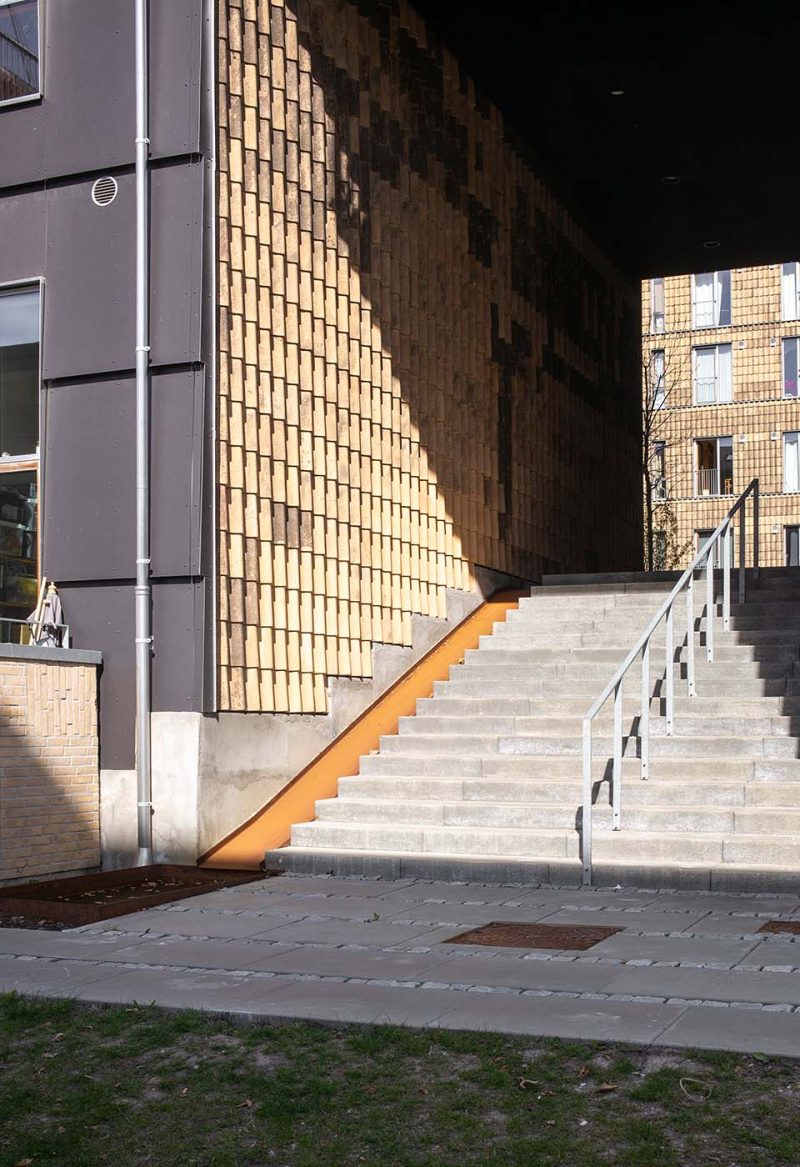
The roof water as well as most of the rainwater is handled through open water channels made of untreated steel, which are led out through the gate openings.
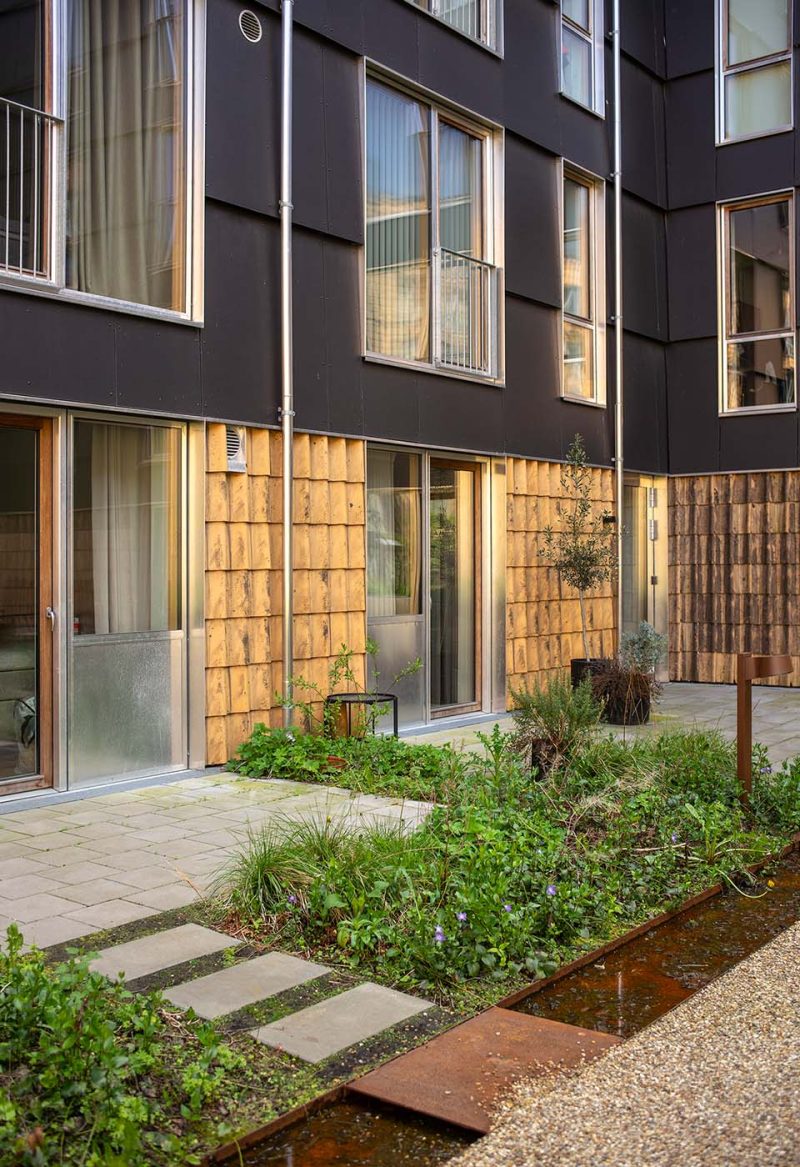
The landscape along the ground floor in the courtyard primarily addresses the nearby residence, where planting and trellises provide screening between the public courtyard and the private home.
Common areas
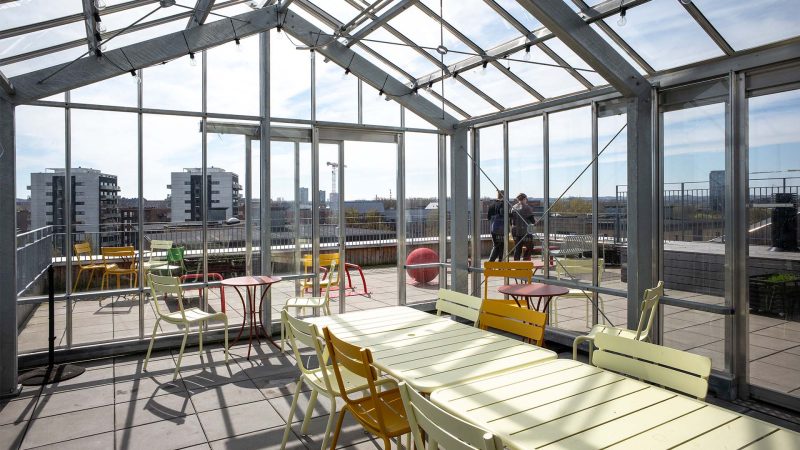
The development aims to integrate the different types of housing and create a community across the homes through semi-private zones and shared access areas, both facing the courtyard and towards the public streets. For the student apartments, a common room has been established with access from the street level and courtyard, as well as a shared laundry room. The inner courtyard is for the residents’ communal use. In the southwest and southeast corners, rooftop terraces with greenhouses have been established, for the use of family apartments and student apartments, respectively.
Open spaces
Open space at ground level in courtyards and recreational areas amounts to 2,593 m², while open space on balconies and roof terraces amounts to 266 m². The total open space thus amounts to 2,859 m². This provides outdoor recreational areas equivalent to 21% of the building’s floor area.
Below the courtyards and the buildings, a basement has been constructed for car and bicycle parking, technical facilities, and storage.
Project Facts
Building Data
Project Name: Teglgården in Trælasten
Category:Co-Housing, Commercial, Housing, Landscape, Renovation, Youth homes
Client: Pension Danmark Ejendomme A/S
Location: Aarhus
Gross Area: 13.830 m²
Date: 2019 - 2023
Status: Listed
Number of Units: 244 owner-occupied and rental apartments divided into 147 student apartments and 97 family apartments, as well as 2 commercial leases
The Task
Program: Communal living and housing
Construction System: The facades and roof are made of lightweight wooden facade elements, pre-assembled with windows.
Contact: Jan Albrechtsen, jal@vandkunst.dk
Contact Group:Thomas Kröll, Ole Skjelmose, Kirstine Fagerlund Hvidegaard, Asbjørn Severin Lütken, Jan Albrechtsen, Thomas Nybo Rasmussen, Emil Dyhr Serritslev, Line Tebering, Kristian Svejborg, Martin Hauge Grønkjær, Pi Dehli Kolbye, Rasmus Voss Nyborg, Rasmus Kragh Bjerregaard, Kim Dalgaard
Employees: Kristian Westh, Nick Dyhr, Olmo Ahlmann, Anna Maya Handberg, Stine Christiansen
Consultant Team
Architect: Vandkunsten
Landscape: Vandkunsten
Engineer: Artelia
Contractor: Nordstern A/S