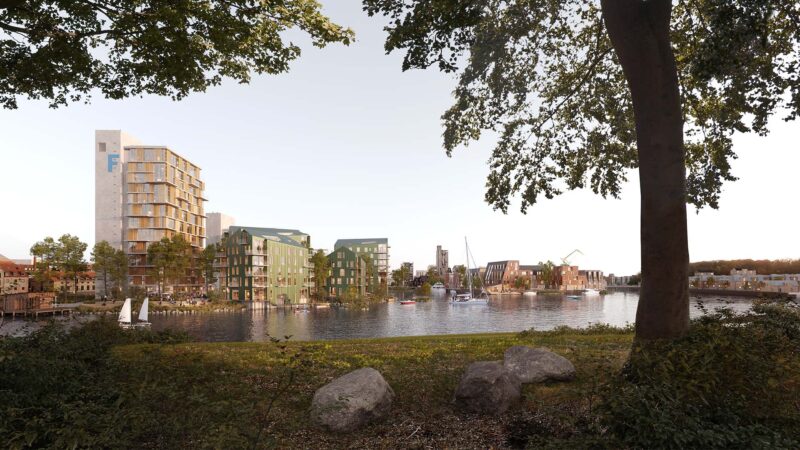
Odense
2022 - 2030
The industrial and the organic
Past, present, and future
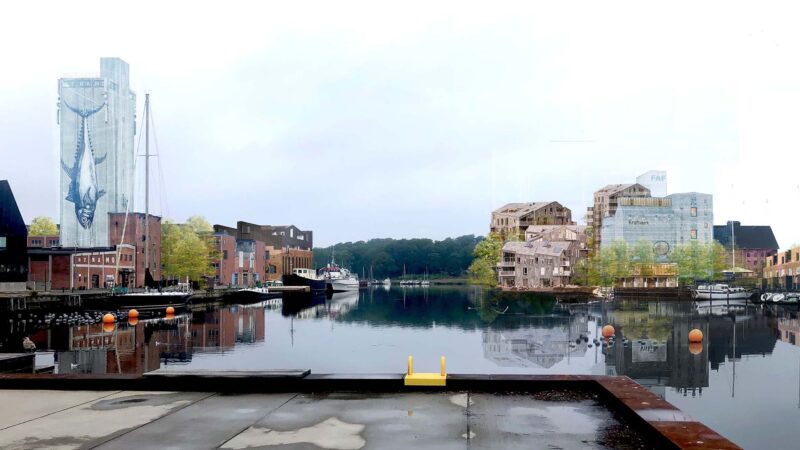
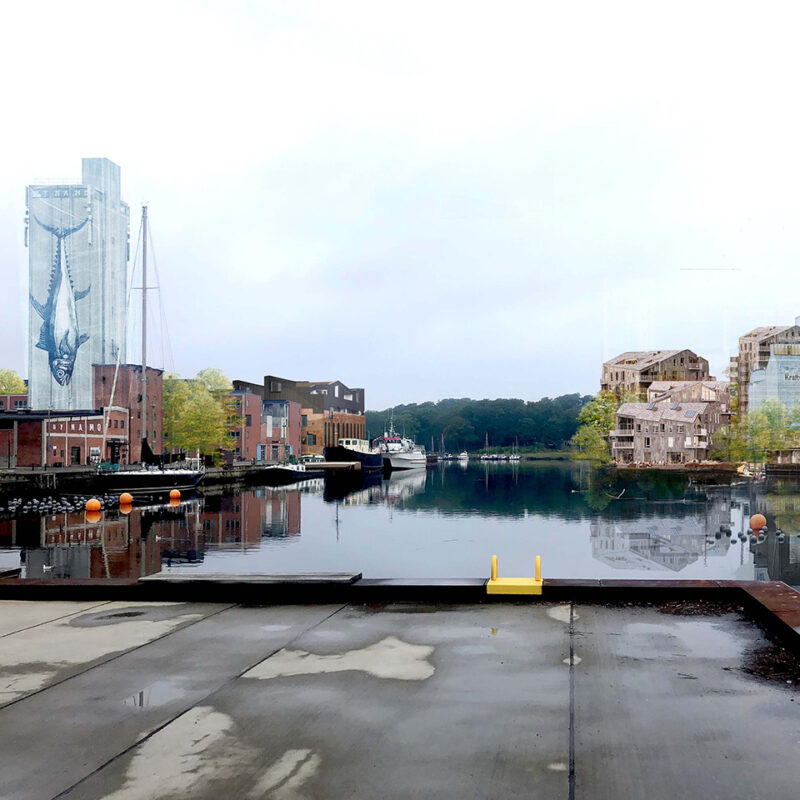
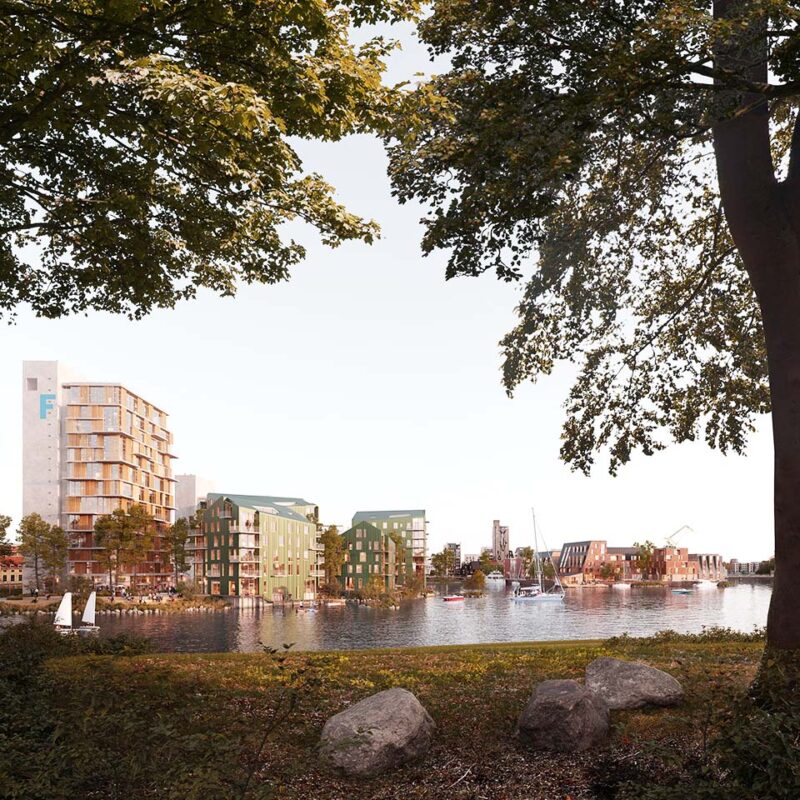
Odense’s inner harbor is full of contrasts. The empty silos reflect the industrial history and the harbor’s original function. With their unsentimental weight, created purely out of practicality, they stand like a unique Fynish Manhattan, surrounded by beech forest that stretches all the way down to the water’s edge.
New and old meet in different functions, scale, and quality. It is in the contrast between history and modernity, between the natural and the built, and in the many diverse bodies of water that the interplay emerges, which to us represents the very DNA of the harbor. Here we found the seed to solve the task and provide the answer to a development plan for Odense Harbor City.
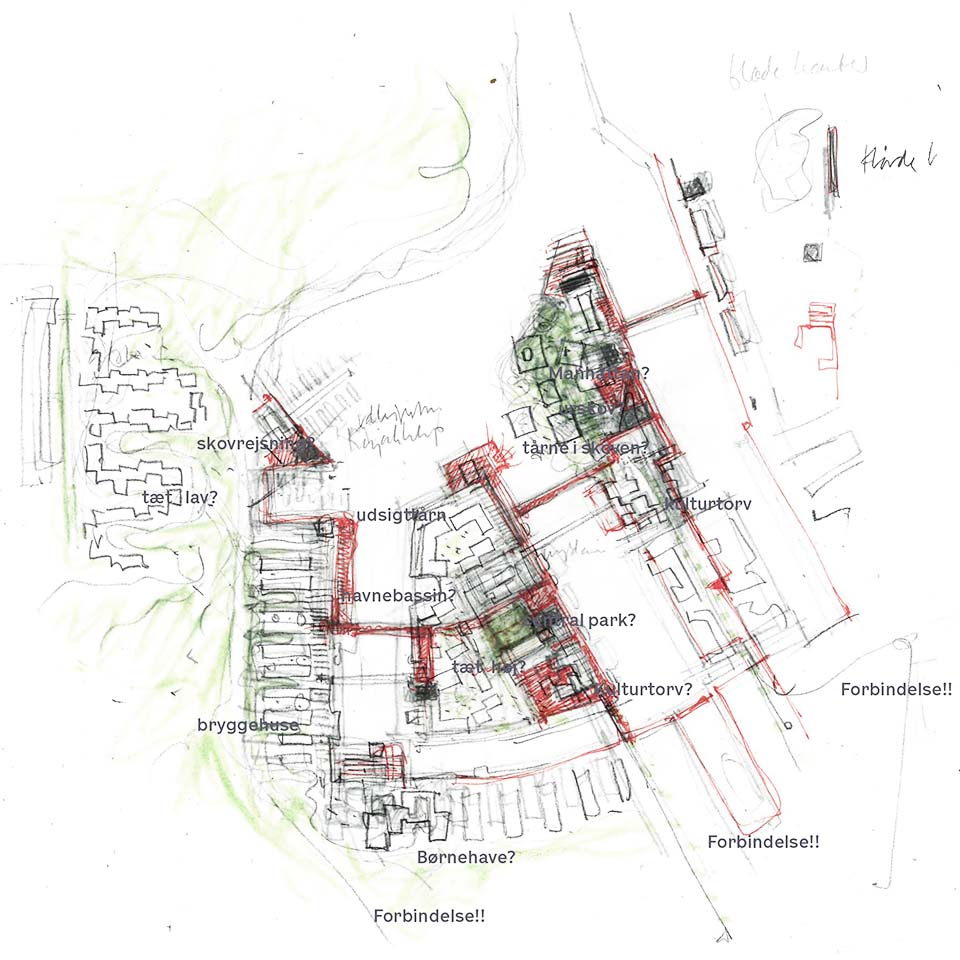
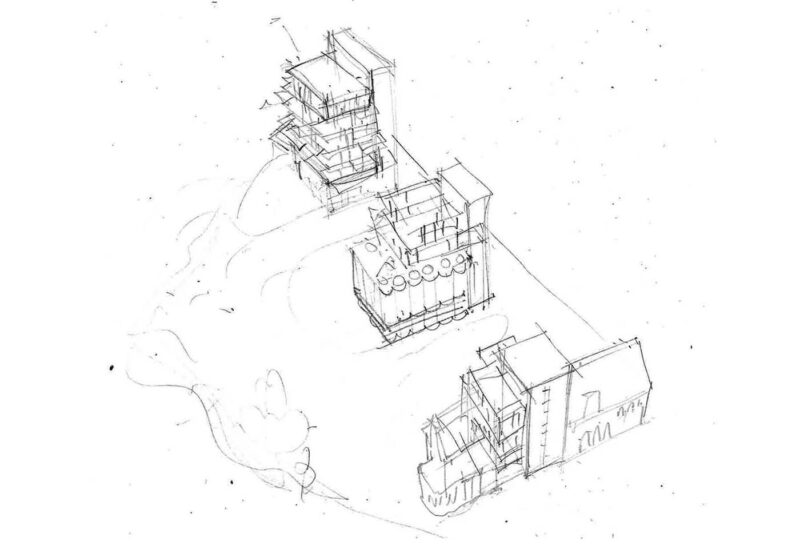
Right at the beginning, we made a sketch that has accompanied us – a crumpled drawing that tries to translate our reading of the harbor into an architectural approach. The sketch points to an existing motif in the harbor – in the contrasts. The soft and the hard edges. The industrial and the overgrown.
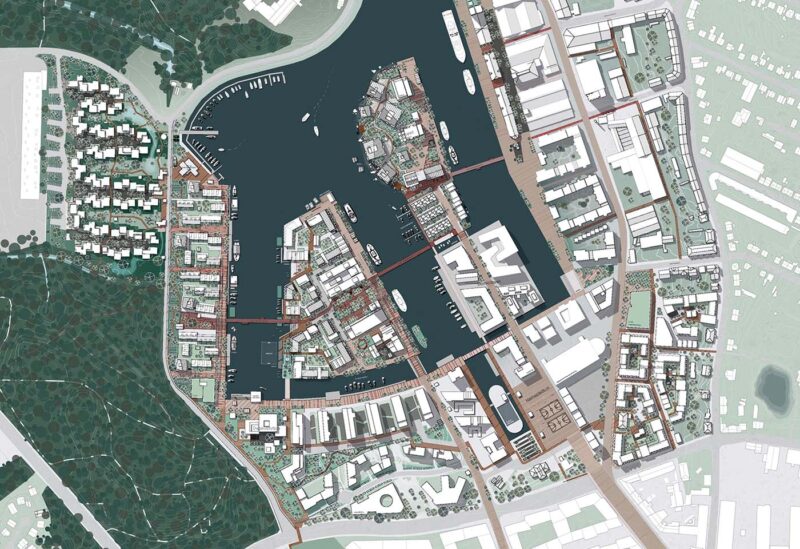
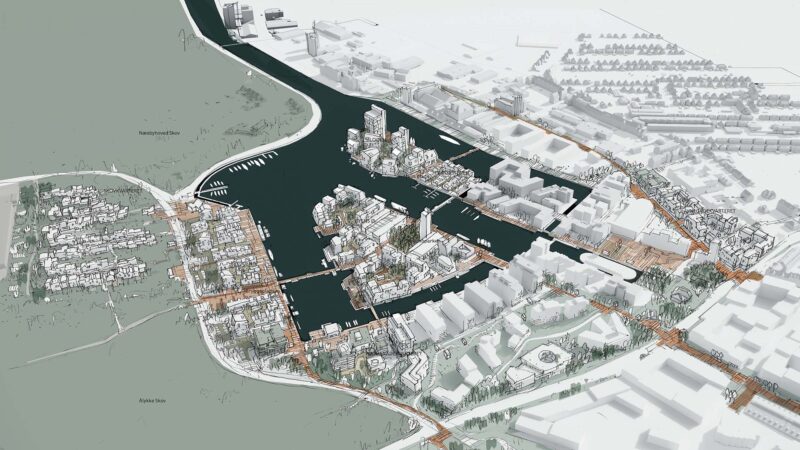
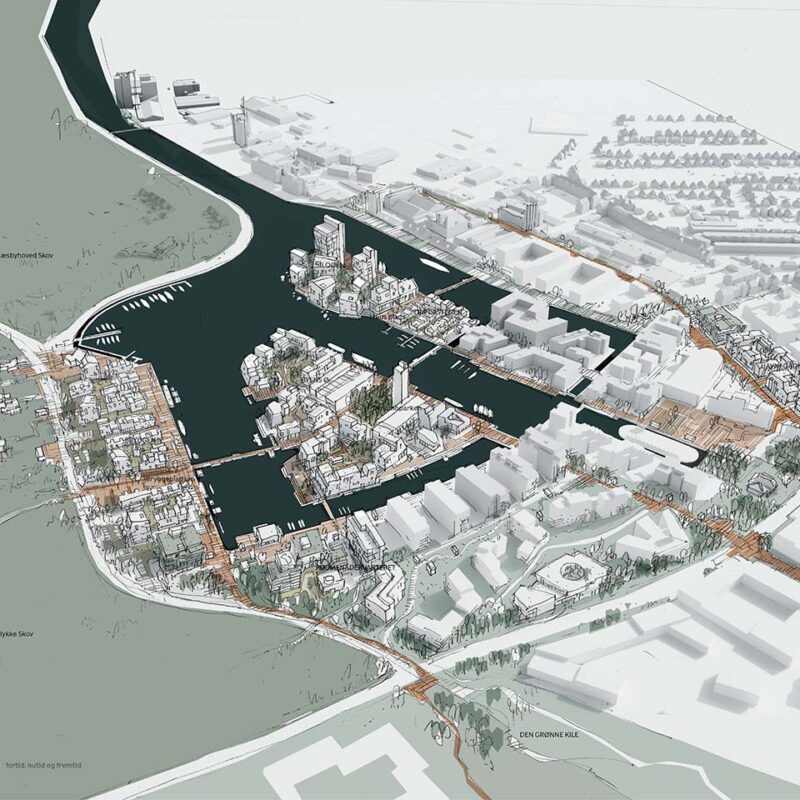
The main concept stems from the very special qualities found in Odense Harbor, between the contrasting built environment, the surrounding forest, and the unique visual views and connections. The potential of the green spaces, the water, and the distinctive cultural environment is realized and further developed. The islands/districts are connected by bridges, the water surface, the greenery on a large scale, and through views and connections on a more intimate scale.
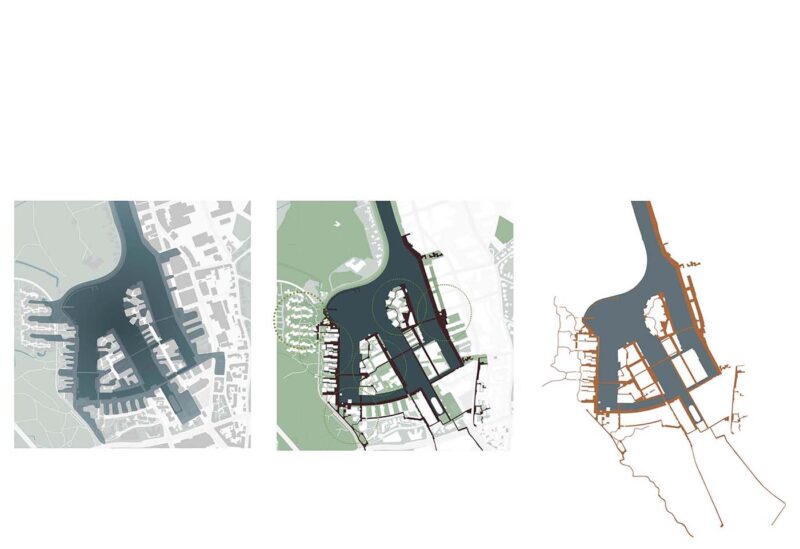
En havn af kvarterer
Each neighborhood – its own identity that arises from the traces, both physical and functional, that already exist. We preserve what works – that which either has architectural quality, is a cultural-historical landmark, or serves a special function. The islands/neighborhoods are connected by bridges, the water surface, the greenery on a large scale, and by views and connections on a more intimate scale. Each neighborhood – its own typology based on the surroundings and its location in and around the harbor.
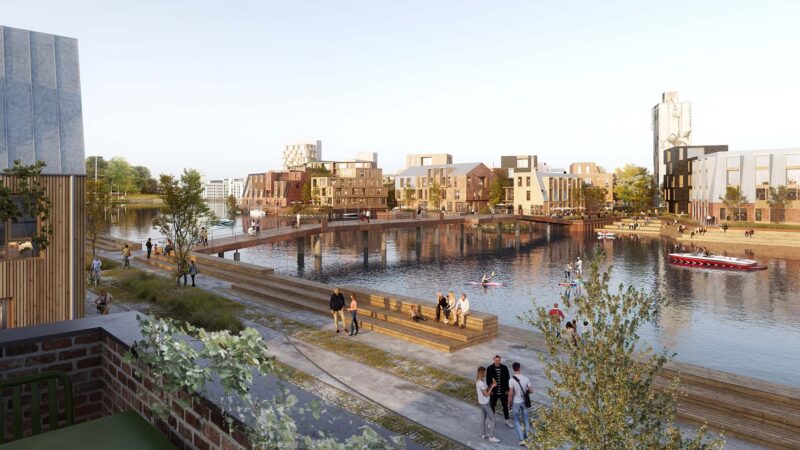
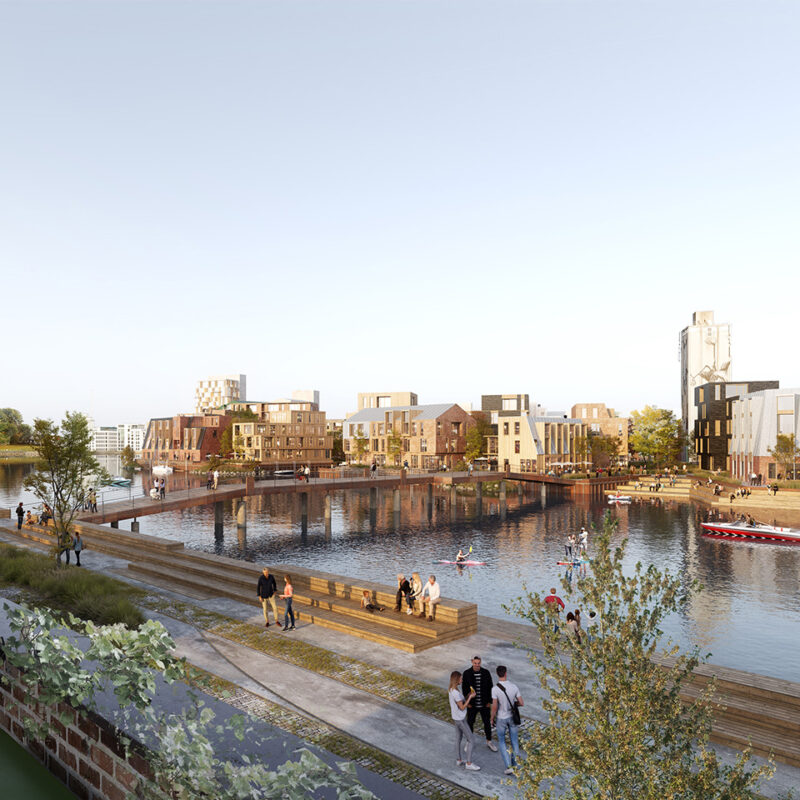
The City's Island
City Island is the heart of the harbor. It is often the first thing you see when you arrive at the harbor. Here, everyday life and community activities unfold side by side with the life that the island's atmosphere, public spaces, and attractions draw.
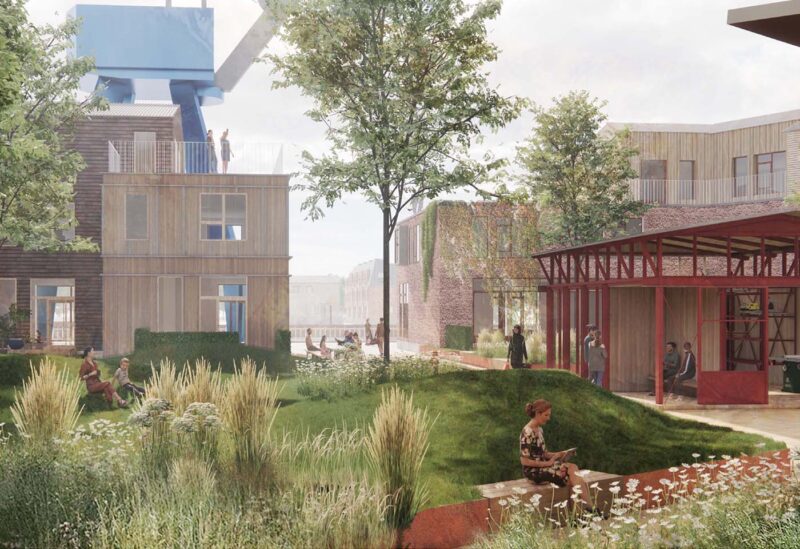
Alleys and courtyards
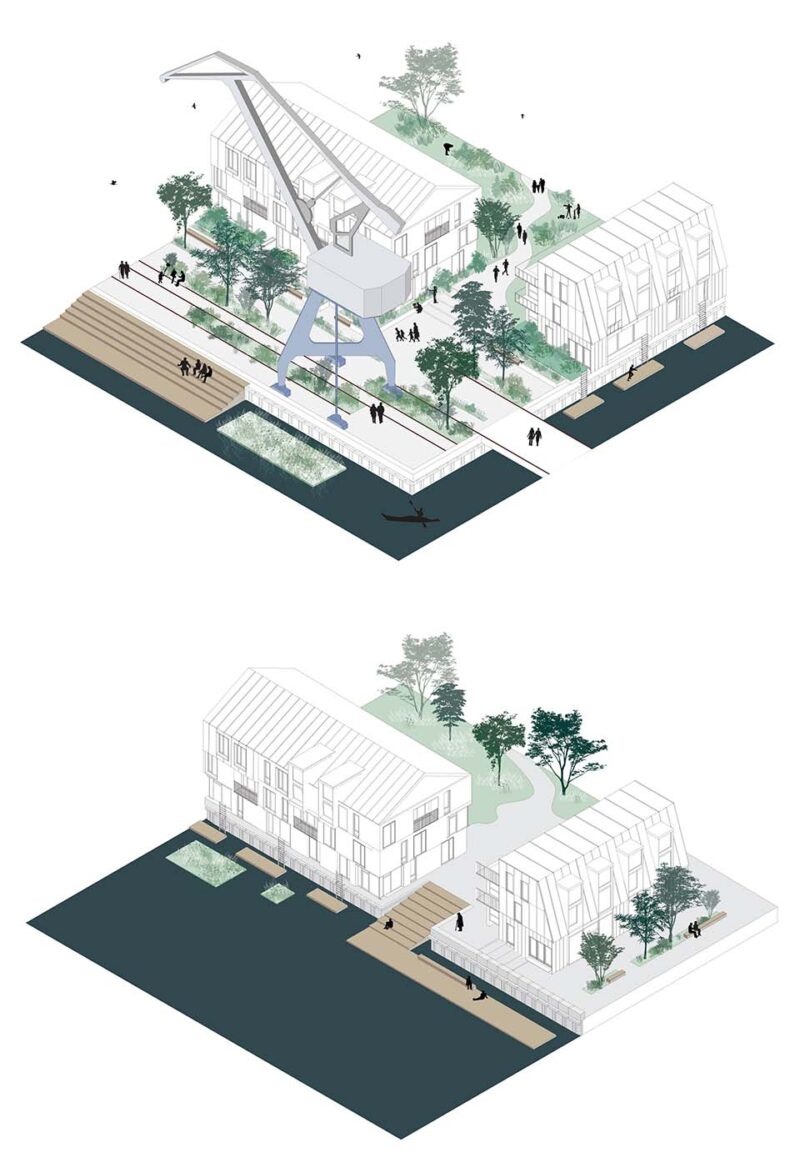
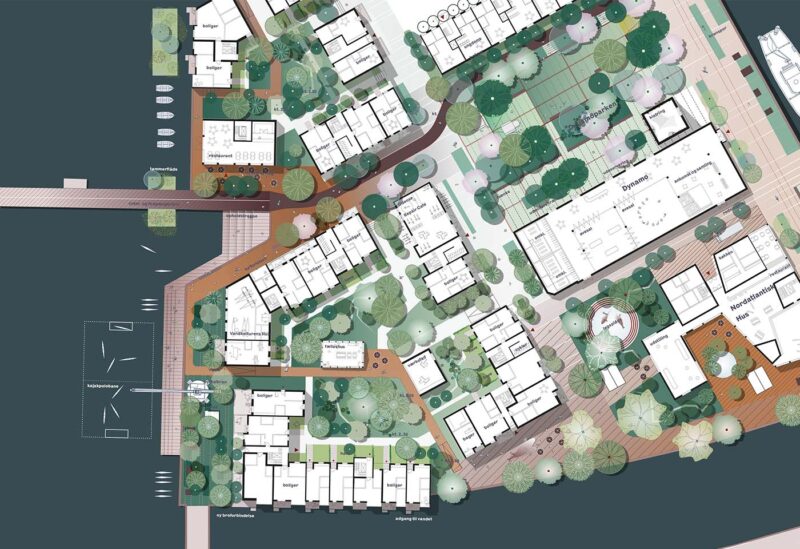
City Island has the scale of the city – this is where the harbor is densest and most urban. This is where there is the most life, and also why we choose the block typology which is both outward-facing but also has a calmer courtyard, creating hierarchies of different types of outdoor spaces with room for both quiet and activity.
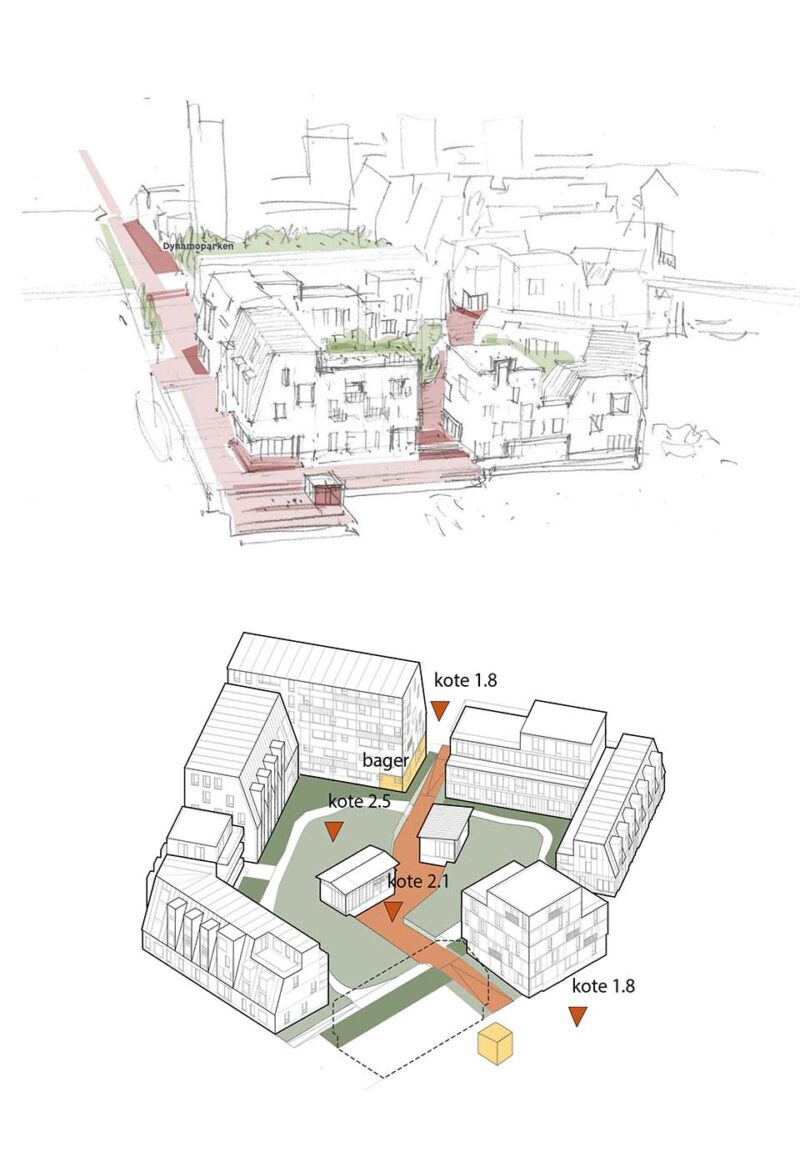
Typology and architecture
On City’s Island, different building typologies are combined, which we know from the city of Odense and the existing buildings at Byen’s harbor. New building typologies inspired by Muus Warehouse, the North Atlantic House, and existing block developments in the harbor district are assembled like a classic city block with harbor character.
Siloøen
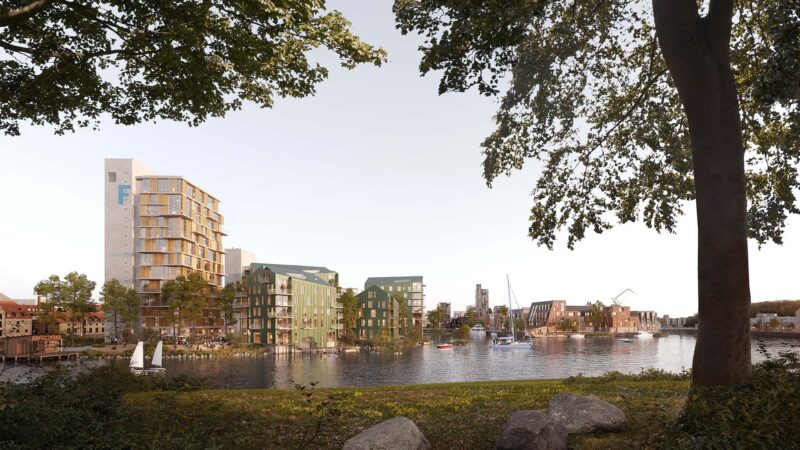
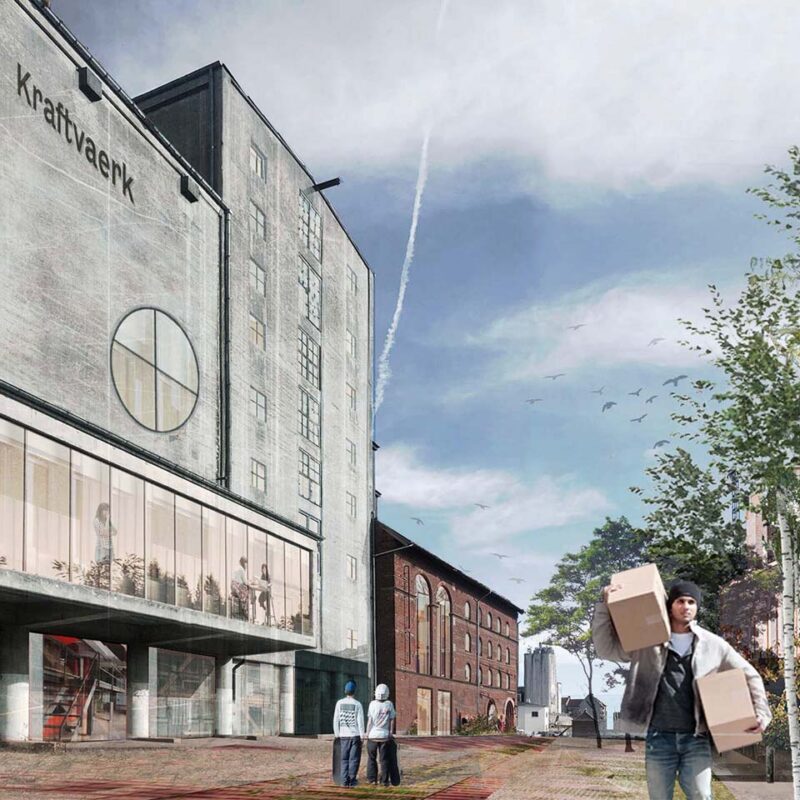
The name of the island is, of course, Silo Island. The large, heavy, majestic silos constitute the main identity and character of the island itself and stand as a landmark for the entire Port of Odense, especially at the entrance. We take as our starting point and believe that we all – consultants, politicians, the municipality, citizens, and property owners – would prefer to preserve the character-defining silos. It is about cultural heritage, identity, and not least CO2.
The plan for Odense Harbor aims to create the absolute best planning conditions for the silos to be preserved despite the challenges. A robust plan that allows time to work in favor of their complete or at least partial preservation. By starting from a plan that takes into account the existing silos’ footprint – as the basis for both a basic scenario and an expanded one – we achieve the most sustainable plan in terms of ensuring the survival of the existing silos.
Siloerne i landskabet – ’den Landskabelige Skål’
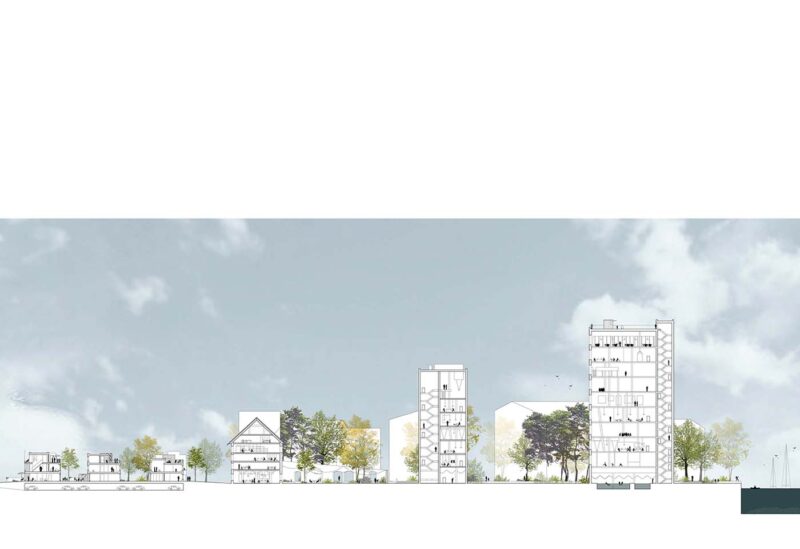
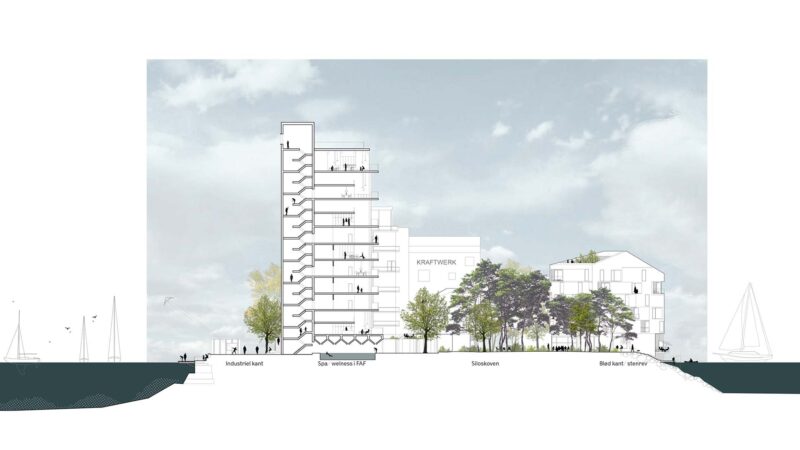
Odense Harbor has a truly unique green and topographical character. On all sides of the harbor, the difference in height to the water is increased by buildings or vegetation, making the harbor appear as a landscape bowl. It is a rare and distinct landscape situation in a Danish context, which we wish to emphasize and strengthen with our proposal. This includes the preservation or partial preservation of the silos as an important focal point, whose height directly corresponds to the bottom of the bowl with the harbor’s horizontal water surface. The architectural potential of the silos indicates the direction, volume, and height of the new buildings, and their stepped scale progression outward is both an architectural and landscape quality.
The forest
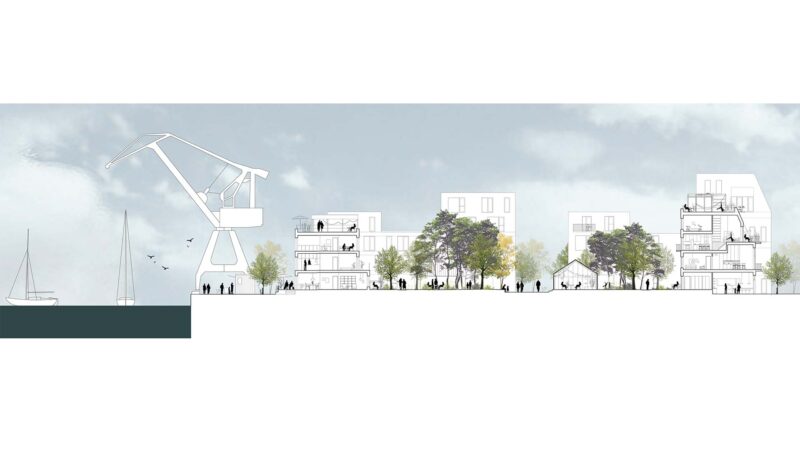
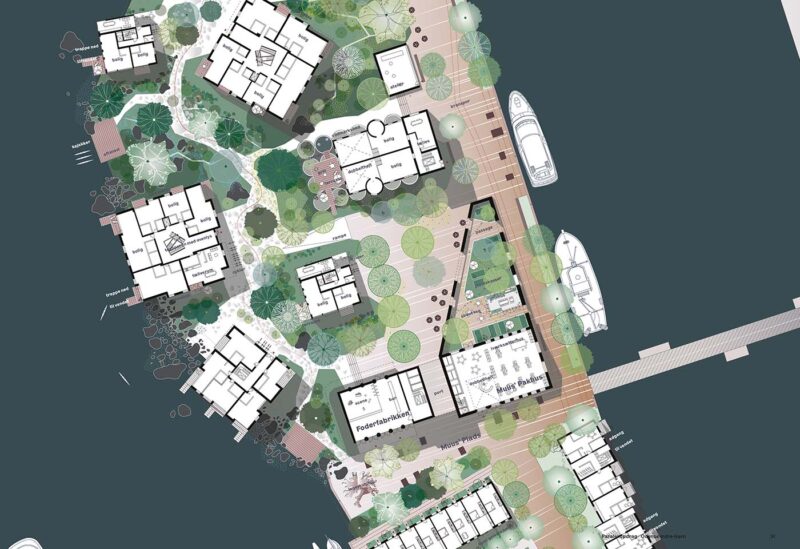
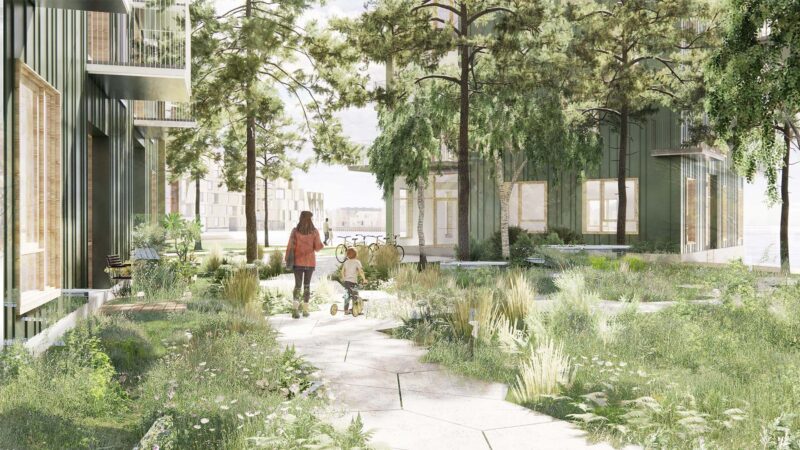
The landscape on Siloøen is, like the buildings, striking. Even from a distance, you can see the forest that stretches towards the sky along with the buildings. The forest makes the space between the houses intimate, rich in nature, and human in scale despite the height of the buildings.
The new development
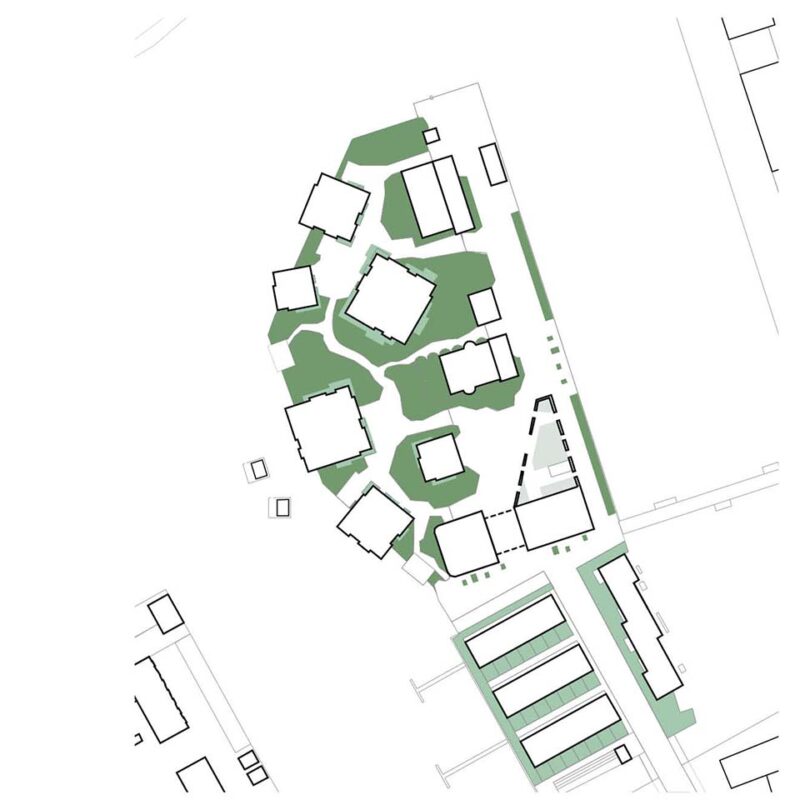
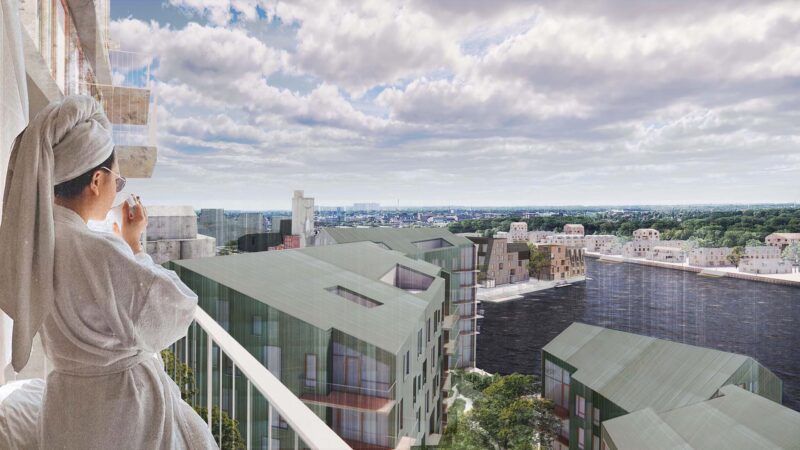
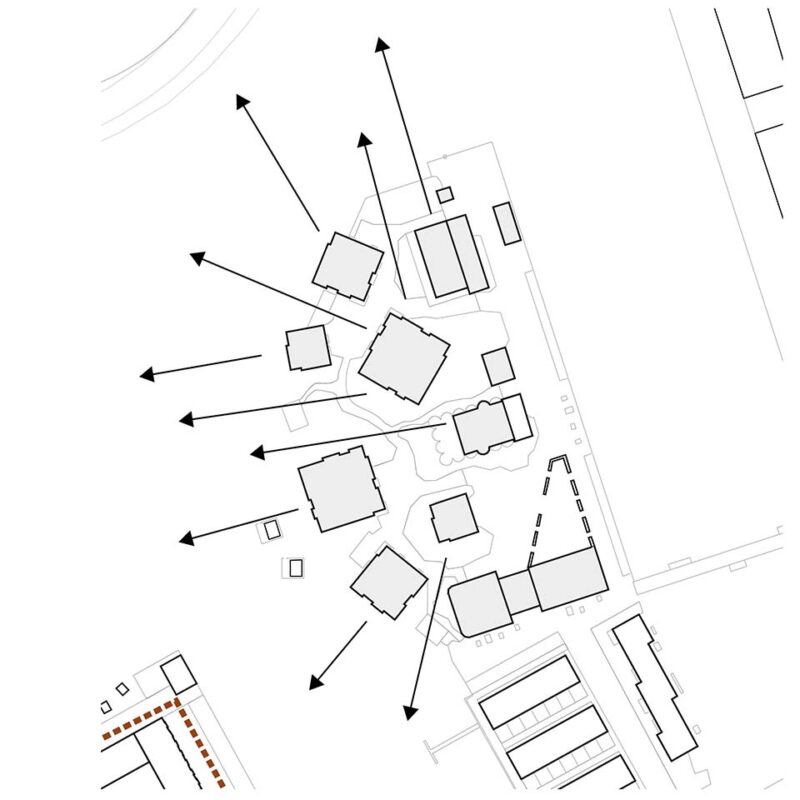
With the silos tightly positioned to the west, and our main handle in hand, we are designing a development that stands completely apart from the rhythms to the east. Here, we propose a point development that varies in height from 4-9/10 stories. The point buildings follow the direction of the view, and angled spaces arise in between, creating room for sight lines and visual connections both inside and out.
The Wharf and the Forest District
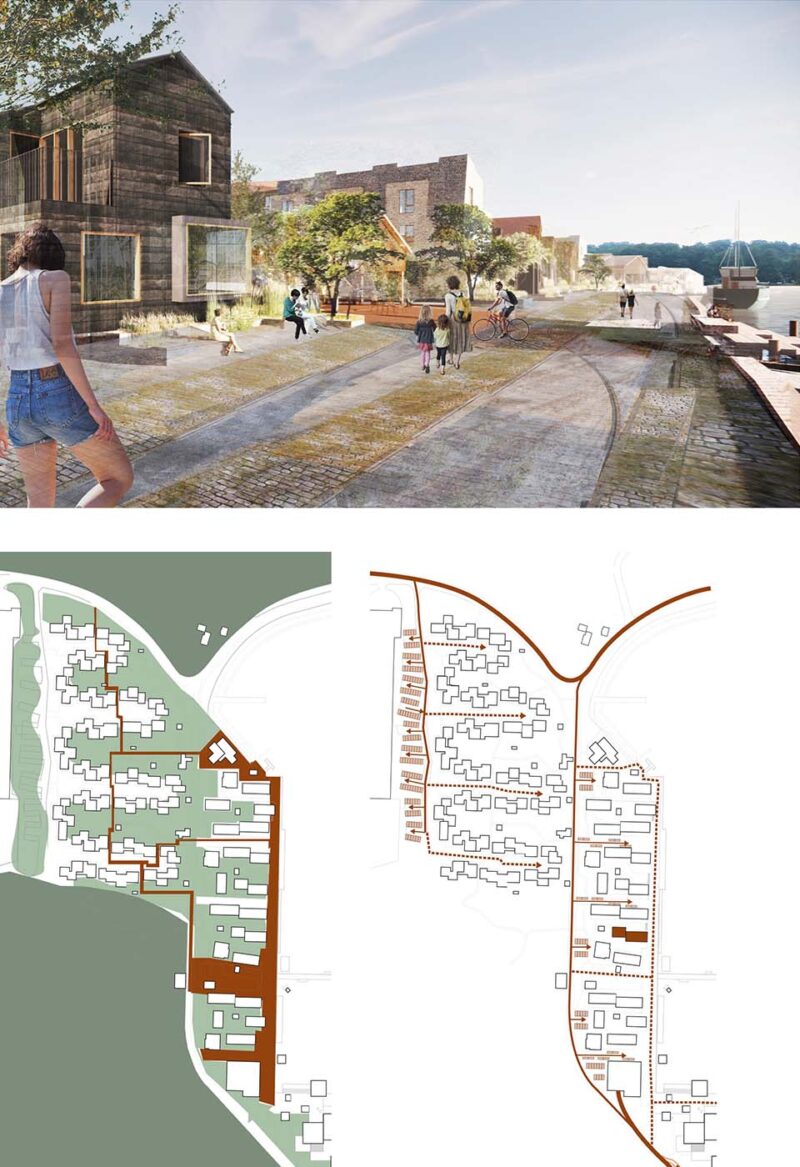
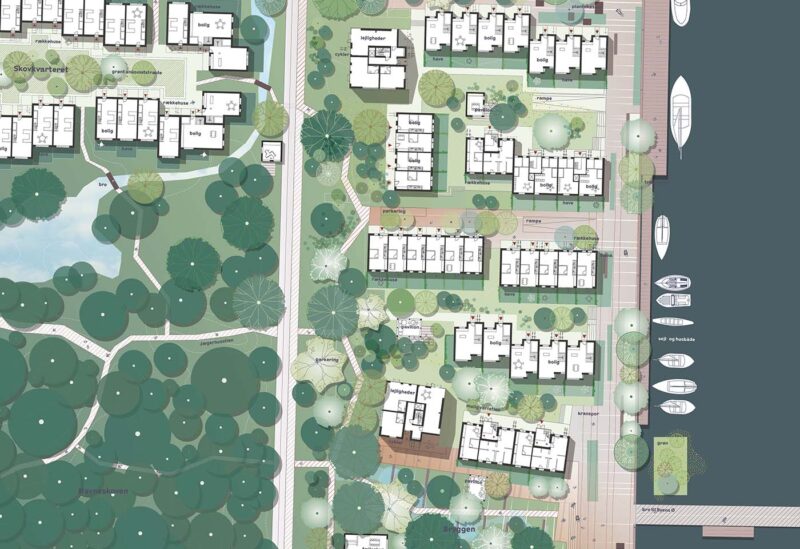
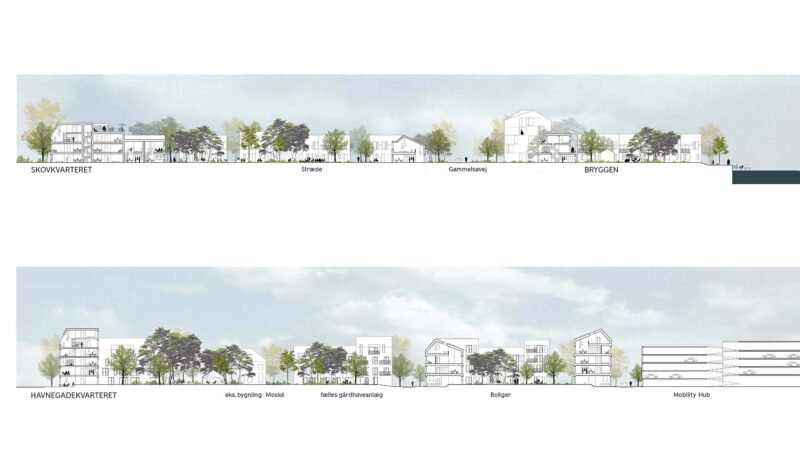
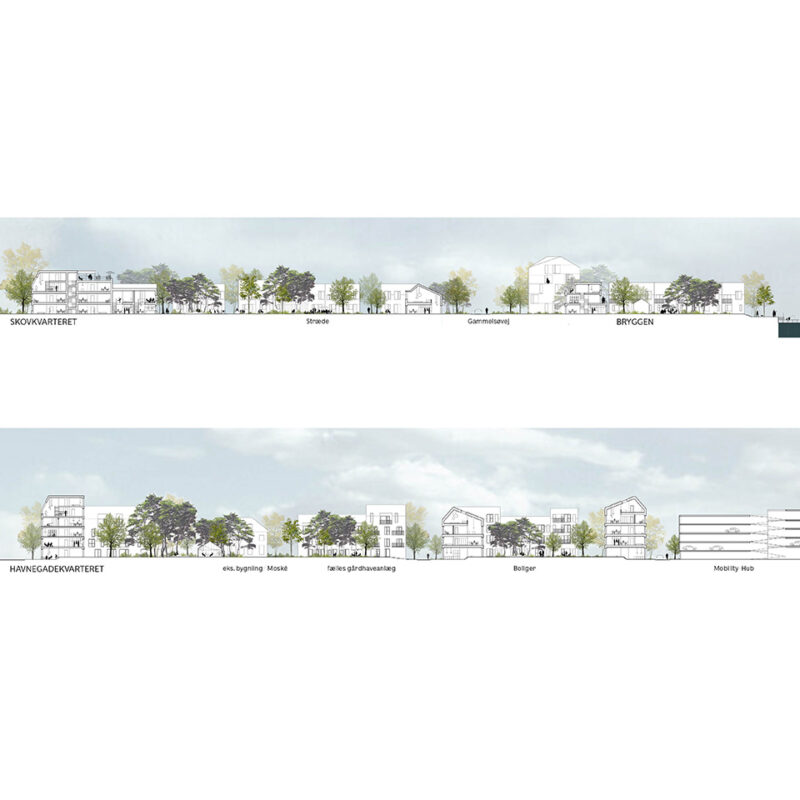
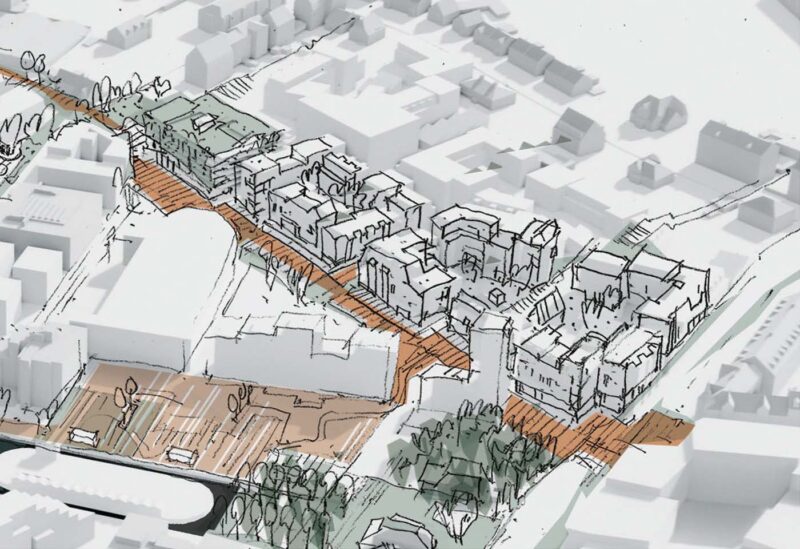
Bryggen and Skovkvarteret are two very different neighborhoods. Yet the two developments are neighbors, sharing the large clearing in the forest as a common edge and landscape space. As an overall approach, we connect Næsbyhoved and Ålykke Forests to complete the green belt that is so unique in Odense Harbor. Skovkvarteret winds in and out of the forest, creating clearings. Bryggen is clearly defined to the east by the harbor’s edge and the existing quay, which we preserve and similarly treat as in the rest of Odense Harbor City.
Havnegadekvarteret
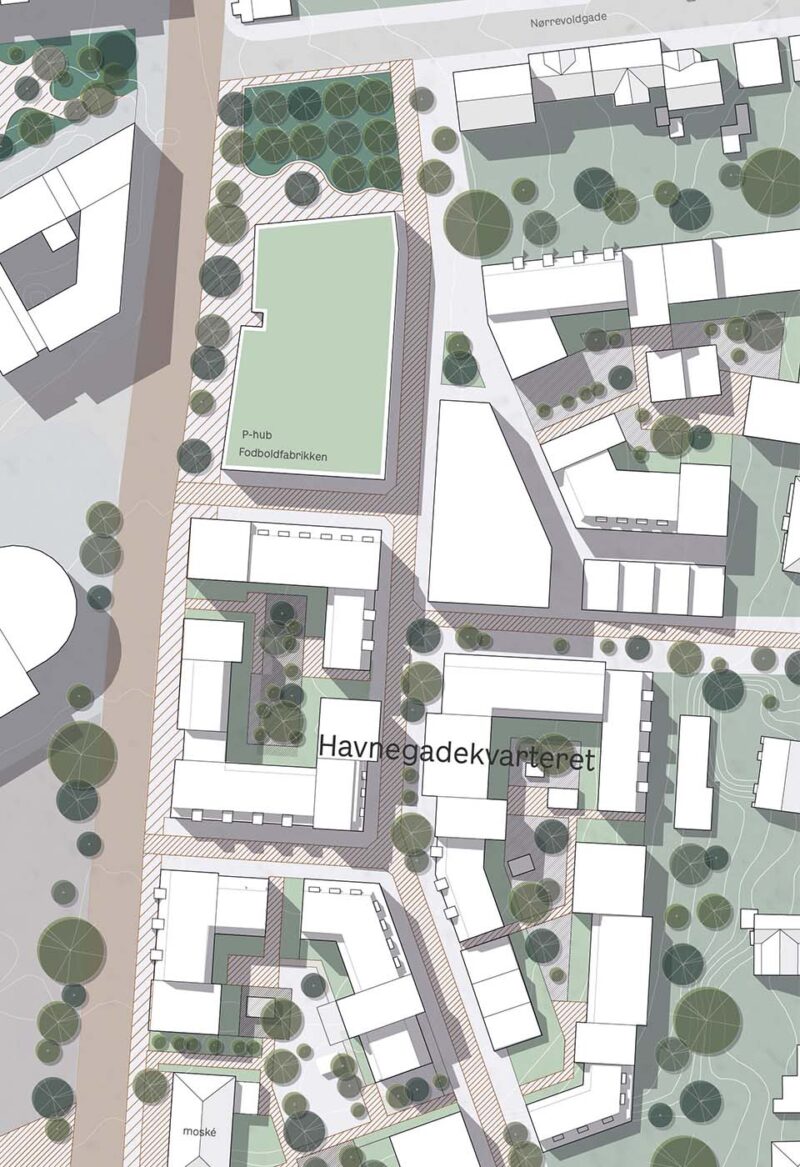
The neighborhood is located between the relatively tall new residential buildings in the southern part of the harbor and the low but highly situated villa scale of the Skibhus neighborhood. We have designed a segmented block development that creates views from the neighborhood behind to the gardens through offsets and stepped building heights. A modern interpretation of block buildings with back houses and workshops in a green, cohesive courtyard of spaces and opportunities.
Project Facts
Building Data
Project Name: Odense Havneby
Category:Commercial, Culture & Institutions, Housing, Planning, Renovation
Client: A Enggaard
Location: Odense
Gross Area: 150.000 m2
Date: 2022 - 2030
Status: 1. prize in competition. Ongoing
The Task
Program: Planlægning, boliger, erhverv, kultur og institutioner,
Activity: Udviklingsplan, nybyg, transformation, strategi, infrastruktur ydelse: parallelopdrag,
Job Type: Parallelopdrag
Contact: Jan Albrechtsen, jal@vandkunst.dk
Contact Group:Jan Albrechtsen, Pernille Schyum Poulsen, Sara Ettrup, Pauline Faaborg, Tone Elgaard, Bolette Victoria Bukrinski, Nel Jan Schipull, Maria Bro Schaadt, Marie Hildebrand Frederiksen, Sam Coolidge
Consultant Team
Architect: Tegnestuen Vandkunsten
Landscape: SLA
Engineer: EKJ Rådgivende Ingeniører
Consultant: Cushman & Wakefield/ RED, Mogens A. Morgen, Valentin Trafikplanlægning